
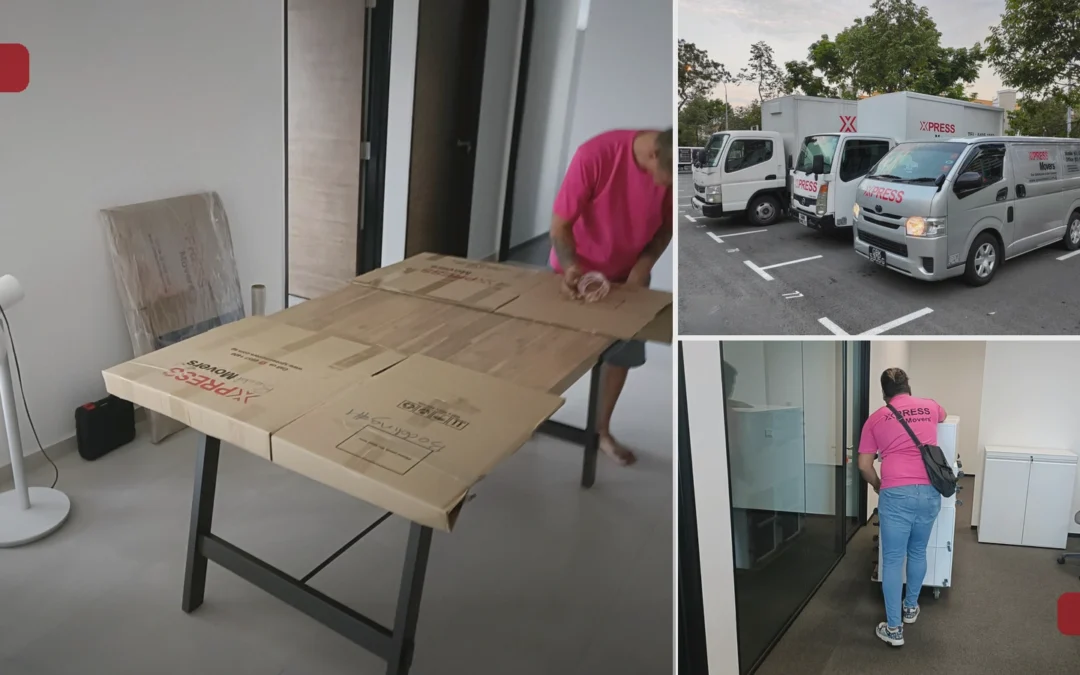
Moving an office is not the same as moving a home. There’s no single owner making decisions — there’s a business that needs to keep running, employees who need a working desk on Monday morning, and equipment that can’t simply be tossed into a box and hoped for the best. An office relocation involves timelines, building rules, IT coordination, and dozens of small decisions that, if missed, can turn moving day into a costly disruption.
For business owners, office managers, and operations teams in Singapore, choosing the right office movers is one of the most practical decisions in the entire relocation process. This guide walks through how office moving works, what to expect from a professional office moving company in Singapore, and what to check before signing off on a mover.
Why Hiring Professional Office Movers in Singapore Matters
A commercial move carries different risks than a residential one. Offices typically involve more furniture per square foot, shared building access, and equipment that’s expensive to replace or repair.
Reduced disruption. A business that can’t operate during a move loses productive hours, and sometimes client-facing time. Professional office movers plan around this, aiming to get a business back to functioning as quickly as possible.
Safer handling. Office furniture — desks, filing cabinets, glass partitions — is often bulkier and heavier than residential furniture, and requires proper lifting technique and manpower to move without damage to the item or the building.
Better coordination. A commercial mover is used to working with facilities teams, building management, and multiple stakeholders at once, rather than a single homeowner giving instructions.
Commercial access requirements. Office buildings, business parks, and retail units often have specific rules — loading bay bookings, lift protection requirements, and restricted moving hours — that a residential-only mover may not be familiar with.
Time management. Office moves are frequently scheduled around weekends or after business hours to minimise disruption, which requires a mover who can plan and commit to a tighter, more coordinated schedule.
What Office Moving Services Usually Include
A typical office relocation service covers more than just transport. It generally includes:
- Site assessment — reviewing the current and new premises to understand volume, access, and any handling challenges
- Planning — mapping out the move sequence, timeline, and manpower required
- Packing — using appropriate materials for office items, from paper files to electronics
- Wrapping — protecting furniture surfaces and fragile items during transit
- Labelling — marking boxes and furniture by department, floor, or room for faster unpacking
- Dismantling — taking apart larger furniture such as desks, workstations, and cabinets for safer transport
- Moving — the physical relocation itself, coordinated around access points and timing
- Reassembly — putting furniture back together at the new location
- Storage — temporary storage for items not needed immediately at the new site
- Disposal — removal of unwanted furniture or equipment
- Delivery coordination — timing deliveries and pickups around building access windows
Not every move needs every service, which is why a proper site assessment and itemised quotation matter more in commercial moving than in a standard residential move.
How to Plan an Office Move in Singapore
Office relocations go more smoothly with a structured timeline. Here’s a general planning guide:
8 to 12 Weeks Before
- Confirm the new lease and access dates
- Notify your office mover early to secure a suitable date
- Begin assessing furniture and equipment — what moves, what gets replaced, what gets disposed of
- Check building management requirements at both the current and new premises
4 to 6 Weeks Before
- Finalise the office layout at the new location
- Appoint an internal move coordinator or department representatives
- Confirm lift bookings, loading bay access, and any moving permits required
- Notify staff of the move date and expectations
1 to 2 Weeks Before
- Begin packing non-essential items
- Label boxes and furniture by department or destination room
- Confirm IT disconnection arrangements with your internal IT team or vendor
- Reconfirm move-day timing with your mover and building management
Moving Day
- Ensure a coordinator is present at both locations
- Keep a critical-items list on hand for anything that needs priority handling
- Allow the moving team access to lifts, loading bays, and designated pathways as arranged
After the Move
- Check furniture and equipment against your inventory
- Report any issues promptly
- Confirm disposal or storage arrangements were completed as agreed
Important Singapore-Specific Office Moving Considerations
Commercial buildings in Singapore, whether in the CBD, business parks, or industrial estates, tend to have their own operating rules that directly affect how a move is carried out.
- Building management approval — most office towers and business parks require advance notice or written approval before a move can proceed
- Lift protection — service lifts often need protective padding installed before large furniture is moved through them
- Service lift booking — many buildings require a specific time slot for goods lift usage, which needs to be booked ahead of moving day
- Loading bay access — loading bays are often shared and time-limited, so confirming a booking window in advance avoids delays
- Moving permits — some buildings or estates require a permit or security clearance for movers and vehicles
- Restricted hours — certain buildings only allow moving activity outside regular office hours or on weekends
- Parking — loading and unloading access can be limited in CBD areas, shophouses, and older commercial buildings
- Security registration — visitor or vendor registration may be required for movers to access the building
- Disposal rules — some buildings have specific procedures for disposing of large furniture or e-waste
- Insurance questions — it’s worth clarifying with your mover what coverage applies during transit, particularly for higher-value equipment
Confirming these details ahead of time — ideally during the site assessment — prevents last-minute surprises on moving day.
How Office Furniture and Equipment Should Be Handled
Different items in an office require different handling approaches:
- Desks and workstations — often need to be dismantled and reassembled, especially modular or systems furniture
- Chairs — generally straightforward, but ergonomic or executive chairs may need extra padding
- Cabinets and filing systems — should be emptied of loose files where possible before moving, and labelled to match their new location
- Monitors and computer peripherals — require careful wrapping to prevent screen damage
- Printers — larger units may need to be secured to prevent internal component shifting during transport
- Glass partitions — where applicable, require specialised protective wrapping due to fragility
- Pantry equipment — fridges, microwaves, and similar items should be handled upright where possible
- Fragile or sensitive items — anything irreplaceable or delicate should be flagged during the site assessment for individual handling
For IT equipment specifically: Xpress Movers can coordinate the physical movement of properly disconnected equipment, such as computers, monitors, and printers, once they’ve been powered down and disconnected. For servers, data-sensitive systems, or technical setup at the new location, we recommend businesses coordinate directly with their own IT specialists to handle shutdown, backup, and reconnection — this ensures sensitive systems are managed by those most familiar with them.
How to Reduce Downtime During an Office Relocation
Downtime is usually the biggest concern for businesses moving offices. A few practical ways to minimise it:
- Move in phases — relocate non-essential departments first, keeping critical operations running as long as possible
- Label by department — this speeds up unpacking significantly and reduces confusion at the new site
- Appoint internal coordinators — having one point of contact per department keeps communication clear on moving day
- Back up data — before any IT equipment is disconnected, ensure everything important is backed up
- Confirm floor plans early — knowing exactly where furniture goes at the new site avoids delays during placement
- Prioritise essential departments — client-facing or time-sensitive teams should typically be set up first
- Move after business hours where permitted — this reduces disruption to daily operations, if building rules allow it
- Keep a critical-items list — items needed on day one at the new office should be tracked and moved with priority
- Prepare a first-day box — basic supplies and essential documents packed separately so teams aren’t searching through boxes on their first morning
How Much Do Office Movers in Singapore Cost?
Office moving costs vary significantly and depend on a combination of factors, including:
- Office size and number of workstations
- Total volume of furniture and equipment
- Distance between the old and new premises
- Access conditions at both locations (lifts, loading bays, stairs)
- Packing requirements
- Dismantling and reassembly needs
- Special equipment or fragile items
- Storage requirements
- Disposal of unwanted furniture
- Weekend or after-hours scheduling
- Number of trips and manpower required
Because every office move differs in scope, Xpress Movers provides tailored quotations based on a proper site assessment, with transparent pricing and no hidden fees. This allows businesses to understand exactly what they’re paying for before committing to a moving date.
Questions to Ask Before Choosing an Office Moving Company
Before signing off on an office mover, it’s worth asking:
- Do you conduct site assessments before quoting?
- Is the quotation itemised, or a flat lump sum?
- Are extra charges clearly explained upfront?
- Can you coordinate directly with building management?
- Do you provide wrapping and dismantling as part of the service?
- Can you support temporary storage or disposal if needed?
- What happens if the scope of the move changes closer to the date?
- Is the proposed schedule realistic given the volume involved?
- How will items be labelled and tracked during the move?
A mover who can answer these clearly and specifically is generally a stronger indicator of experience than one offering vague reassurances.
Common Office Moving Mistakes to Avoid
- Booking too late — good movers get booked up, especially near month-end when many leases turn over
- Underestimating volume — leads to underquoted trucks, extra trips, and delays
- Not checking building rules — missing a lift booking or permit requirement can stall a move entirely
- Poor labelling — causes confusion and slows down setup at the new office
- Not backing up data — a basic but critical step before any IT equipment is disconnected
- Leaving disposal until the last minute — unwanted furniture often needs to be cleared before final handover
- Failing to appoint an internal coordinator — without one, moving day communication tends to break down
- Choosing only by lowest price — the cheapest quote isn’t always the most complete one; missing inclusions often show up as extra charges later
Why Businesses Choose Xpress Movers for Commercial Relocation
Xpress Movers & Logistics Pte Ltd has been operating in Singapore since 2007, originally as Xpress Movers & Transportation, and has been structured as Xpress Movers & Logistics Pte Ltd since 2016.
For office and commercial relocations, businesses typically work with us for:
- Islandwide service across Singapore
- Transparent pricing with no hidden fees
- Tailored planning based on each office’s specific layout and access conditions
- Professional, careful handling of office furniture and equipment
- Support for storage and disposal needs alongside the move itself
- No GST
- Friendly, straightforward service from initial enquiry to moving day
We don’t claim to be the cheapest or the largest mover in Singapore — our focus is on planning each commercial move properly and communicating clearly throughout the process.
Office Moving Checklist
- Confirm new lease and access dates
- Book office movers early
- Check building management requirements (old and new premises)
- Confirm lift bookings and loading bay access
- Appoint an internal move coordinator
- Notify staff of the move date
- Back up all data before IT disconnection
- Label boxes and furniture by department
- Prepare a critical-items list
- Prepare a first-day box with essentials
- Confirm disposal or storage arrangements
- Do a final walkthrough of the old premises before handover
Frequently Asked Questions About Office Movers in Singapore
How early should I book office movers in Singapore? Ideally 8 to 12 weeks in advance, especially if your move falls near month-end or during a busy relocation period. This gives enough time for a proper site assessment and planning.
Can office movers dismantle and reassemble desks? Yes, most office movers, including Xpress Movers, offer dismantling and reassembly as part of the moving service, particularly for modular or systems furniture.
Can office movers move computers and monitors? Yes, once equipment is properly powered down and disconnected, movers can handle the physical transport. Server and data-sensitive setup is best handled by your own IT team.
Do I need approval from building management? In most cases, yes. Office towers, business parks, and many commercial buildings require advance notice or written approval before a move can take place.
Can an office move be done after working hours? Often, yes, and it’s a common way to reduce business disruption. This depends on what your building management permits, so it’s worth confirming early.
Do office movers provide boxes and packing materials? Most office movers, including Xpress Movers, can provide boxes and materials as part of the service — this is worth confirming during your quotation discussion.
Can unwanted office furniture be disposed of? Yes, disposal services are commonly offered alongside office relocation, so unwanted furniture doesn’t need to be handled separately.
Can office furniture be stored temporarily? Yes, if your new premises isn’t ready to receive everything at once, temporary storage can be arranged.
How long does an office move take? This depends on the size of the office, volume of furniture, and access conditions. A proper site assessment gives a more accurate estimate than a general timeframe.
How do I get an accurate office-moving quotation? The most accurate quotations come from a site assessment rather than a rough estimate over the phone. Xpress Movers provides tailored, transparent quotations based on your specific office and requirements.
Conclusion
An office move involves more moving parts than most people expect — building rules, IT coordination, staff communication, and careful handling of furniture and equipment all need to come together on the same day. With proper planning and the right office movers, most of this complexity can be managed smoothly, with minimal disruption to your business.
Planning an office move in Singapore? WhatsApp Xpress Movers at +65 8289 3592 for a transparent and tailored commercial moving quotation.
Your Satisfaction is Our Concern.